 RANZCP homepage

President’s update: Bringing women’s mental health into the centre of psychiatric practice
23 Oct 2026
President's message
One of the responsibilities we share as psychiatrists is to keep asking whether the care we provide reflects the needs and experiences of the people who come to us. This is particularly important when we consider women’s mental health, where significant advances in understanding have not always translated into the care and services women need.
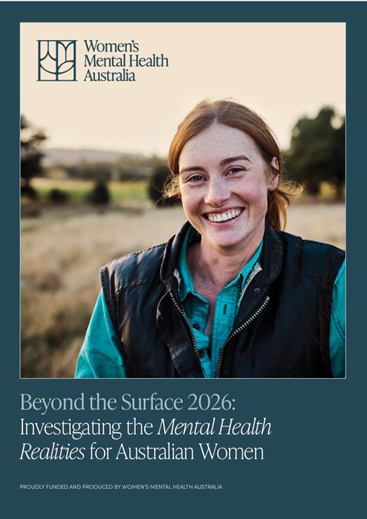
Across Australia and Aotearoa New Zealand, we continue to see high levels of mental health difficulties among women, particularly younger women. In August, Women’s Mental Health Australia released Beyond the Surface 2026, a national survey of 9,000 Australian women. More than half reported experiencing mental health issues, with around one in four experiencing severe psychological distress.
These findings are a reminder of the work still ahead of us as a profession.
Women's mental health is shaped by many aspects of life, including physical health, reproductive experiences and the circumstances in which people live. Yet sex and gender have not always received sufficient attention in the research that informs our practice. Since the start of 2026, the National Health and Medical Research Council and the Medical Research Future Fund grant processes require researchers to consider sex and gender throughout the research process. This is a welcome step towards building an evidence base that better reflects the people for whom we provide care.
For psychiatrists, this has practical implications. We need to remain curious about how hormonal changes may affect mental health and treatment, while recognising how gender, culture and life circumstances influence a person’s experience of illness. This also means being mindful of how easily physical symptoms can be overlooked when someone has a mental health diagnosis.

The safety of women receiving mental health care is another area requiring our continued attention. The College’s position statement on sexual safety highlights the substantially higher rate of reported sexual assault in mixed-gender inpatient wards compared with single-gender settings. We have an important role in advocating for safer environments, including appropriate women-only spaces and effective responses when sexual harm occurs.
We also know that family violence can have a profound and lasting effect on mental health. Our position statement on family violence and mental health recommends that clinicians ask about current or past family violence as part of a comprehensive psychiatric assessment. These conversations can be difficult, but they may be essential to understanding a person’s circumstances and providing appropriate care.
Pregnancy and the time following birth present unique challenges, yet access to specialist services remains uneven across Australia and Aotearoa New Zealand. The College has advocated for publicly funded mother and baby units across Australia, alongside improved access in Aotearoa New Zealand. Continued advocacy is essential to ensure women can access appropriate mental health care while maintaining important connections with their babies.
Our attention to women’s mental health must continue through midlife. Recent research by Lappin, Galletly and Kulkarni has highlighted how menopause may affect the course and treatment of schizophrenia. This is an area where further research and greater awareness among clinicians could make a meaningful difference. Asking about reproductive and menopausal history when relevant, and considering how this information may influence treatment, should be part of our ongoing clinical reflection.
These experiences also remind us that women are not a single, uniform group. Wāhine Māori have experienced significantly higher maternal suicide rates than New Zealand European women, while Aboriginal and Torres Strait Islander women continue to face inequities in access to appropriate care. Our work must be informed by cultural safety and an understanding of how disadvantage and barriers to services affect mental health. As a bi-national College, we have a responsibility to keep these differences in view when shaping our education, advocacy and professional standards.
I recognise the considerable work already being done by psychiatrists across our two countries to improve understanding and care for women. My hope is that we continue to bring this knowledge into everyday practice and consider where the College can do more to support our members. This includes ensuring our guidance remains responsive to the people we treat and advocating for services that meet their needs. Some improvements will require sustained government investment, while others begin with the questions we ask and the care we provide in our daily work.
I encourage members to reflect on how women’s mental health features in their own practice and where further learning might be useful.
RANZCP Awards Program
I would also like to take this opportunity to recognise the many members whose contributions strengthen our profession. The RANZCP Awards Program offers an important opportunity to recognise members, celebrate outstanding service and invest in the future of psychiatry.

Professor Brett McDermott, Ian Simpson Award

Professor Alison Yung, Senior Research Award
I encourage you to consider nominating a colleague for one of our major awards including the College Medal of Honour, College Citation, Ian Simpson Award, Margaret Tobin Award, RANZCP Senior Research Award and RANZCP Early Career Psychiatrist Research Award.
Nominations and applications close on 31 October 2026
Who has made a difference for you?
In the same spirit, I would also like to hear about the people who have made a difference for you, your career, psychiatry or for the people and communities we serve. Perhaps it is a mentor who helped shape your career, a colleague whose compassion or leadership has stayed with you, or someone whose commitment to their patients, whānau or community exemplifies the very best of our profession.
As part of our recognition of the people who make our profession what it is, the College communications team is developing a series of profiles celebrating psychiatrists whose contribution deserves to be shared. If someone comes to mind, I encourage you to nominate them by contacting the communications team at commshelp@ranzcp.org.
Our profession is shaped by the people who contribute to it, often in ways that extend well beyond their formal roles. Thank you for the care and commitment you bring to psychiatry across Australia and Aotearoa New Zealand.
Dr Astha Tomar
President
More news & views

President's message
President’s update: Reflections from Aotearoa New ZealandI have just returned from the RANZCP New Zealand Conference in the beautiful Bay of Islands, with my...
President's message
President’s update: Reflecting on 80 years of RANZCPToday marks 80 years since 67 psychiatrists from across Australia and Aotearoa New Zealand came toge...
President's message
From the President September 2026September has been a month that has brought many aspects of our College together. Across our trainin...