 RANZCP homepage
Roundtable tackling WA’s gridlocked forensic mental healthcare system
24 Aug 2026
Advocacy
- WA
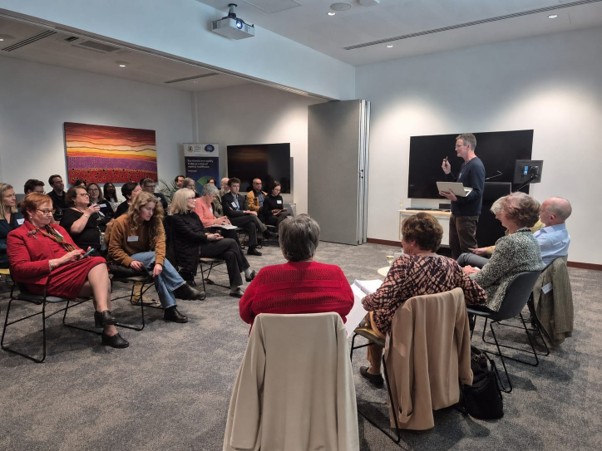
Dozens of mental health and justice leaders have gathered to discuss urgently needed reforms within Western Australia’s forensic mental healthcare system.
The roundtable, led by RANZCP’s Faculty of Forensic Psychiatry WA subcommittee, advocated for higher quality care for people with mental ill-health before, during and after their contact with the justice system.
Psychiatrists, legal experts and youth justice advocates discussed unique challenges faced by those living in detention settings, with WA’s incarceration rates the second highest in Australia.
The cost of incarceration
Detaining one adult prisoner in WA costs approximately $368 per day, or about $135,000 each year, before accounting for wider court, policing, health and social costs. While the financial case for reform was powerful, the cost of a broken system for to those in detention (and their communities) was even more powerful.
Participants identified urgent priority areas, including Aboriginal incarceration rates and the need to use specific policy levers to reduce imprisonment.
They also discussed the WA Government’s progress in the redesign of Banksia Hill, including cultural change processes, but identified where change lagged behind, including meeting obligations under Closing the Gap Agreement or implementing recommendations from the Disability Royal Commission.
The group approached multi-layered challenges at the intersections of justice and mental health sectors and advocated for 22 industry-wide changes, detailed in the communique linked below.
Discussion paper that informed the roundtable agenda [PDF; 281KB]
Communique issued by the Faculty of Forensic Psychiatry WA subcommittee [PDF; 273KB]

Dr Adam Brett, WA Chair of the Faculty of Forensic Psychiatry subcommittee, was interviewed by ABC Radio Perth ahead of the event.
Dr Brett discussed why prisons have increasingly become the default response to unmet mental health needs, and the reforms needed to strengthen forensic mental health care, diversion pathways, rehabilitation and community treatment across Western Australia.
Next steps
The roundtable agreed to proceed with the campaigning priorities discussed at the meeting as a broad and informal coalition of organisations working at the intersection of mental health and justice in WA.
This report will be considered by the Faculty of Forensic Psychiatry WA Sub-committee and the Branch Committee who will develop a plan of action with clear priorities for advocacy.
More news & views
Advocacy
Making an impact: RANZCP advocacy shaping ADHD reformThe shift in the public discourse is clear: ADHD is now a mainstream health policy issue, and the me...
Media release
WA psychiatrists welcome increase to mental health investmentWA psychiatrists have welcomed the $420 million investment in the state’s mental health.
Media release
RANZCP welcomes ban on LGBTQIA+ conversion therapy in WAThe RANZCP welcomes the ban on LGBTQIA+ conversion therapy in Western Australia.