 RANZCP homepage

Feedback we’ve heard about the New Fellowship Program and what it means
1 Apr 2026
Update

Associate Professor Simon Stafrace
Chair, New Fellowship Program Taskforce
Having established why the work matters now in my first column, I would like to turn to what we have heard and how we are interpreting that.
In recent months, our Taskforce has engaged with Fellows, Affiliates, Associates/trainees, and stakeholders through multiple channels, both formally and informally. We have received submissions through the Consultation Hub and our contact email address (see below). We have spoken to and continue to engage with focus groups, webinars, College committees, and other representative groups. And we have also drawn upon a substantial body of prior work including earlier reports, surveys, and accreditation feedback.
What is clear
There is a high degree of consistency in what we have heard.
Across consultations, written feedback, and earlier work, members have described a training program that has become increasingly complex, fragmented, and difficult to navigate.
The curriculum has expanded, but not always coherently.
Assessment is experienced by trainees as burdensome and, at times, poorly aligned with what is taught and what is required in practice. Many have spoken about a loss of trust driven by change fatigue, a perceived lack of transparency, and uncertainty about purpose.
The move towards programmatic assessment is broadly supported in principle, but in practice has raised questions about feasibility, sustainability, and trust in how it is being enacted.
These concerns are not new. They are reflected in the AMC accreditation feedback, in College surveys, and in multiple internal reports over recent years. The current Fellowship program has produced generations of highly capable psychiatrists, and it reflects the commitment and expertise of many who have contributed to it over time; but it is under strain.
Where we are converging
Members have consistently called for greater clarity about the core capabilities of a psychiatrist.
There is strong support for flexibility in training pathways and for aligning curriculum, teaching, and assessment more tightly.
External examinations, including a clinical exam, remain important for credibility and independence. However, there is clear agreement that they cannot carry the weight of assessment alone. They must sit within a broader programmatic model that captures performance over time, reflects real workplace capability, and supports the development of professional identity.
The current programmatic assessment framework is seen as needing to change. WBAs, EPAs and clinical assessments need to reflect meaningful clinical work, support supervisor judgement, and contribute credibly to progression decisions. At present, this is an area of both strong interest and ongoing concern.
The current reliance on mandatory rotations is widely seen as contributing to bottlenecks and inefficiencies, particularly in rural and regional settings. Many have suggested alternative models including clusters, broader exposure requirements, or more individualised pathways that allow for experience in private and public settings.
Finally, there is a strong and consistent message about the need to embed cultural safety and lived experience into the program, not as add-ons, but as core elements of training and practice.
Taken together, these signals point toward a program that is more coherent, more flexible, and more explicitly grounded in contemporary psychiatric practice.
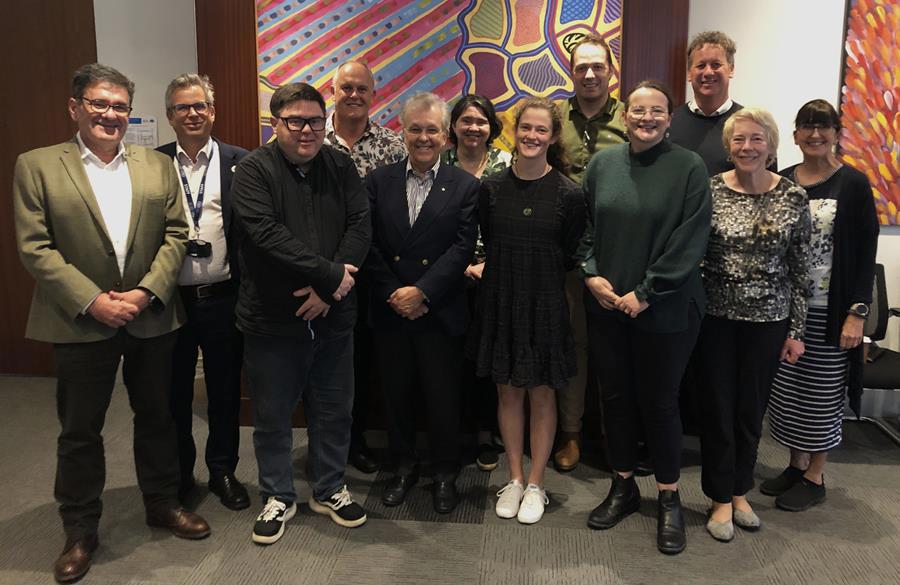
Pictured above: The New Fellowship Program Taskforce at a recent, two-day intensive workshop in Melbourne.
Where tensions remain
Put simply, there is broad agreement about where we need to go, but much less agreement about how to get there. Several key tensions are evident.
The first relates to breadth and depth. There is broad support for generalism in psychiatry, alongside concern it could become superficial without clear definition. We see generalism not as a setting or role, but as an adaptive, integrative way of practising that is comfortable with complexity. We see generalism and sub-specialisation as complementary. How this translates into training requirements remains an open question.
The second is structural. Mandatory rotations provide certainty and breadth but also create rigidity and access problems. More flexible models offer responsiveness and choice but raise questions about consistency and equity of experience.
The third is assessment. Members support reducing burden and improving alignment, while maintaining expectations that standards will be upheld. Programmatic assessment is widely endorsed, but it raises questions about feasibility, reliability, and trust. External exams, particularly clinical exams, continue to be valued for their standardisation and independence.
The fourth is sustainability. Training occurs in pressured clinical services, where supervisors and trainees juggle competing demands. We must design a program that is deliverable in real workplaces, not one that relies on asking more of individuals.
The fifth is scope. Questions about psychotherapy, the scholarly project and academic capability, subspecialty areas, and advanced training continue to generate diverse views. What should be core to Fellowship? What should be optional? What belongs within foundational training, and what sits beyond it?
These are not disagreements to be resolved quickly. They reflect genuine differences in perspective about what matters most.
The question of time
Running through many of these discussions is the question of whether Fellowship should be achievable within five years FTE equivalent.
This is partly a matter of benchmarking with other specialties. It is also a reflection of current practice, where a substantial proportion of trainees already complete training within this timeframe. At the same time, many take longer, often for good reasons.
The question is not simply whether five years is possible. It is what would need to change to make it achievable for most trainees, across a range of settings.
This inevitably brings us back to trade-offs.
If we are serious about a five-year Fellowship, we must be equally serious about defining what is essential, what can be delivered differently, and what may need to sit outside the core program.
Your reactions after the first column
The feedback we received in response to column #1 last week was both immediate and consistent with what we have heard over the past six months.
You told us that you broadly support Fellowship redesign, provided we continue to consult visibly and demonstrate how the program will work in practice. You emphasised that the primary outcome of training must be clinically capable psychiatrists, with strong interviewing, formulation and decision-making skills, developed through real-world experience and deliberate practice.
There was clear concern that over-reliance on local, supervisor-based assessment could weaken objectivity. Many of you called for credible, independent assessment approaches to maintain confidence in standards.
You also highlighted a misalignment between current training settings and contemporary practice, particularly the need for greater exposure to community and private models of care, alongside meaningful experience with diverse populations.
You raised many other issues. You see AI as a useful tool, but one that requires careful training in safe and critical use. You believe psychotherapy competencies must remain substantive and meaningful. And finally, you called for clearer and more supportive pathways for SIMGs.
Taken together, this points to a program that reduces burden; responds to contemporary trends in treatment and care; visibly protects clinical rigour, while aligning training with real-world practice; and finally maintains confidence in the standard of Fellowship.
The work ahead
We will continue to test our thinking with members as it develops and welcome your feedback as we move forward.
The Taskforce is now moving from gathering input to making decisions. These decisions are not straightforward. They will require balancing competing priorities, managing risk, and being explicit about trade-offs.
Our priority now will be to translate what we have heard into a program that is coherent, credible, and deliverable, grounded in evidence, shaped by feedback, and aligned with clear principles about what Fellowship should represent.
Thank you for the strong interest you have shown in this work. Please continue to write in to our address at newfellowshipprogram@ranzcp.org
Your feedback is helping to shape the future standard of Fellowship.
Having established why the work matters now in my first column, I would like to turn to what we have heard and how we are interpreting that.
In recent months, our Taskforce has engaged with Fellows, Affiliates, Associates/trainees, and stakeholders through multiple channels, both formally and informally. We have received submissions through the Consultation Hub and our contact email address (see below). We have spoken to and continue to engage with focus groups, webinars, College committees, and other representative groups. And we have also drawn upon a substantial body of prior work including earlier reports, surveys, and accreditation feedback.
What is clear
There is a high degree of consistency in what we have heard.
Across consultations, written feedback, and earlier work, members have described a training program that has become increasingly complex, fragmented, and difficult to navigate.
The curriculum has expanded, but not always coherently.
Assessment is experienced by trainees as burdensome and, at times, poorly aligned with what is taught and what is required in practice. Many have spoken about a loss of trust driven by change fatigue, a perceived lack of transparency, and uncertainty about purpose.
The move towards programmatic assessment is broadly supported in principle, but in practice has raised questions about feasibility, sustainability, and trust in how it is being enacted.
These concerns are not new. They are reflected in the AMC accreditation feedback, in College surveys, and in multiple internal reports over recent years. The current Fellowship program has produced generations of highly capable psychiatrists, and it reflects the commitment and expertise of many who have contributed to it over time; but it is under strain.
Where we are converging
Members have consistently called for greater clarity about the core capabilities of a psychiatrist.
There is strong support for flexibility in training pathways and for aligning curriculum, teaching, and assessment more tightly.
External examinations, including a clinical exam, remain important for credibility and independence. However, there is clear agreement that they cannot carry the weight of assessment alone. They must sit within a broader programmatic model that captures performance over time, reflects real workplace capability, and supports the development of professional identity.
The current programmatic assessment framework is seen as needing to change. WBAs, EPAs and clinical assessments need to reflect meaningful clinical work, support supervisor judgement, and contribute credibly to progression decisions. At present, this is an area of both strong interest and ongoing concern.
The current reliance on mandatory rotations is widely seen as contributing to bottlenecks and inefficiencies, particularly in rural and regional settings. Many have suggested alternative models including clusters, broader exposure requirements, or more individualised pathways that allow for experience in private and public settings.
Finally, there is a strong and consistent message about the need to embed cultural safety and lived experience into the program, not as add-ons, but as core elements of training and practice.
Taken together, these signals point toward a program that is more coherent, more flexible, and more explicitly grounded in contemporary psychiatric practice.
Pictured above: The New Fellowship Program Taskforce at a recent, two-day intensive workshop in Melbourne.
Where tensions remain
Put simply, there is broad agreement about where we need to go, but much less agreement about how to get there. Several key tensions are evident.
The first relates to breadth and depth. There is broad support for generalism in psychiatry, alongside concern it could become superficial without clear definition. We see generalism not as a setting or role, but as an adaptive, integrative way of practising that is comfortable with complexity. We see generalism and sub-specialisation as complementary. How this translates into training requirements remains an open question.
The second is structural. Mandatory rotations provide certainty and breadth but also create rigidity and access problems. More flexible models offer responsiveness and choice but raise questions about consistency and equity of experience.
The third is assessment. Members support reducing burden and improving alignment, while maintaining expectations that standards will be upheld. Programmatic assessment is widely endorsed, but it raises questions about feasibility, reliability, and trust. External exams, particularly clinical exams, continue to be valued for their standardisation and independence.
The fourth is sustainability. Training occurs in pressured clinical services, where supervisors and trainees juggle competing demands. We must design a program that is deliverable in real workplaces, not one that relies on asking more of individuals.
The fifth is scope. Questions about psychotherapy, the scholarly project and academic capability, subspecialty areas, and advanced training continue to generate diverse views. What should be core to Fellowship? What should be optional? What belongs within foundational training, and what sits beyond it?
These are not disagreements to be resolved quickly. They reflect genuine differences in perspective about what matters most.
The question of time
Running through many of these discussions is the question of whether Fellowship should be achievable within five years FTE equivalent.
This is partly a matter of benchmarking with other specialties. It is also a reflection of current practice, where a substantial proportion of trainees already complete training within this timeframe. At the same time, many take longer, often for good reasons.
The question is not simply whether five years is possible. It is what would need to change to make it achievable for most trainees, across a range of settings.
This inevitably brings us back to trade-offs.
If we are serious about a five-year Fellowship, we must be equally serious about defining what is essential, what can be delivered differently, and what may need to sit outside the core program.
Your reactions after the first column
The feedback we received in response to column #1 last week was both immediate and consistent with what we have heard over the past six months.
You told us that you broadly support Fellowship redesign, provided we continue to consult visibly and demonstrate how the program will work in practice. You emphasised that the primary outcome of training must be clinically capable psychiatrists, with strong interviewing, formulation and decision-making skills, developed through real-world experience and deliberate practice.
There was clear concern that over-reliance on local, supervisor-based assessment could weaken objectivity. Many of you called for credible, independent assessment approaches to maintain confidence in standards.
You also highlighted a misalignment between current training settings and contemporary practice, particularly the need for greater exposure to community and private models of care, alongside meaningful experience with diverse populations.
You raised many other issues. You see AI as a useful tool, but one that requires careful training in safe and critical use. You believe psychotherapy competencies must remain substantive and meaningful. And finally, you called for clearer and more supportive pathways for SIMGs.
Taken together, this points to a program that reduces burden; responds to contemporary trends in treatment and care; visibly protects clinical rigour, while aligning training with real-world practice; and finally maintains confidence in the standard of Fellowship.
The work ahead
We will continue to test our thinking with members as it develops and welcome your feedback as we move forward.
The Taskforce is now moving from gathering input to making decisions. These decisions are not straightforward. They will require balancing competing priorities, managing risk, and being explicit about trade-offs.
Our priority now will be to translate what we have heard into a program that is coherent, credible, and deliverable, grounded in evidence, shaped by feedback, and aligned with clear principles about what Fellowship should represent.
Thank you for the strong interest you have shown in this work. Please continue to write in to our address at newfellowshipprogram@ranzcp.org
Your feedback is helping to shape the future standard of Fellowship.
More news & views
Update
Psychiatrists welcome rollout of Thriving Kids initiative in South AustraliaThe South Australian Branch of the Royal Australian and New Zealand College of Psychiatrists (RANZCP...
Update
Across the College: September highlightsIn this month’s Across the College, we feature highlights from Victoria, New South Wales, Australian...

Update
The Dean's reflection: SeptemberTeaching, learning and assessment: When did we lose the art of teaching? In an increasingly transact...