 RANZCP homepage
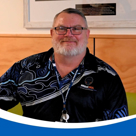
Rural Champion: Dr Chris Henry
20 Mar 2026
Profile
Dr Chris Henry is a RANZCP Rural Champion. His path to psychiatry is deeply shaped by empathy, experience and his cultural identity. A proud Walbunja man from Yuin Country, he moved from the saltwater country of the South Coast of NSW, leaving the rhythm of the tides and the immediate embrace of his family, to the inland plains of Wiradjuri and Dhudhuroa Country, to begin his internship at Albury Wodonga Health was one of the most daunting yet exciting transitions of his life.
Did you always know you wanted to become a doctor? Tell us how this came to be.
Becoming a doctor has been a childhood dream of mine ever since I witnessed the profound impact that medical care had on my own family, igniting a passion to offer that same hope to others.
I have spent years working toward this goal because I view medicine as a calling—one where I can use my problem-solving skills to navigate complex health crises and help people reclaim their quality of life.
My interest in medicine started as a simple curiosity about how the body works, but over time, it evolved into a steadfast mission to serve underserved communities and address health disparities.
What inspired you to choose psychiatry as a specialisation?
Psychiatry wasn’t actually part of my plan. I started studying medicine as a mature-age student after a few other careers. I’ve worked in hospitality, had my own painting business, and I have a Bachelor of Health Science in Chinese Medicine.
I initially wanted to be a rural generalist. A lot of people see their GP for mental health concerns, so I thought I’d do a rotation in psychiatry as an intern to understand it better. I really enjoyed it and was told I’d make a great psychiatrist, so I applied for the training program and was successful. After 12 months of training, I knew it was the right fit for me.
What I enjoy most is listening to people’s stories. I like to have a yarn. For me, it’s not just about medication — it’s about hearing people, understanding their lives, and helping connect them with services that can support them to have a better quality of life.
What’s your medium-term career vision look like? Where do you see yourself in three years?
I am excited to begin Stage 3 in February 2026, which marks the final phase of my journey toward Fellowship. In three years’ time, I see myself working as a newly minted Fellow in a rural community.
My vision is to apply my specialist training where it is needed most, ensuring that rural and regional patients have access to the same calibre of mental health support as those in metropolitan hubs.
If you were talking with a RANZCP Trainee or Fellow who was contemplating moving to a rural location, how would you convince them that it would be a great decision?
I would tell them that rural practice offers a level of clinical variety you simply won’t find in the city. You aren’t just a cog in a large machine; you become a vital generalist-specialist. Because resources are leaner, you develop a sharper clinical intuition and a broader range of skills, from acute crisis management to complex long-term recovery. It’s the ultimate way to truly test and refine your expertise
There is a profound sense of purpose in working where you are truly needed. In a rural setting, you see the tangible impact of your work on the community every day. You aren't just treating a diagnosis; you are supporting a person within the context of their whole life—their family, their job, and their town. The longitudinal relationships you build are incredibly rewarding and remind you exactly why you entered medicine in the first place.
Beyond the clinic, the lifestyle is incomparable. Moving rural allows you to escape the grind of metropolitan traffic and high living costs, replacing them with a genuine sense of belonging and space. Professionally, there is often more room for leadership and innovation—you have the autonomy to shape services and advocate for your patients in a way that can be difficult in a rigid urban hierarchy.
Self-care is important for psychiatrists training and practising in a rural location. What’s your top three ways to look after your wellbeing?
For me, it’s about getting out into nature. When I’m back home on Country, I go surfing, paddle-boarding or spearfishing. Here, I like camping around Mitta Mitta. I try to catch trout, though I’m not very good at it!
It’s healing for me to be on Country. But when that’s not possible, being in nature and looking up at the stars gives me that same sense of calm. I always feel rejuvenated afterwards.
The RANZCP Rural Psychiatry Training Pathways initiative, funded by the Department of Health, Disability and Ageing under the Psychiatry Workforce Program.
More news & views
 26 February 2026
 26 February 2026
 26 February 2026